viernes, 20 de diciembre de 2013

Interview - Juan Martinez Val-Piera (Mine Engineer)

        Hi there again dear readers of Math in Space blog, it is an honor to have with us Mine Engineer Juan Martínez. He studied Mine engineering at Universidad Politécnica de Madrid, and he is now working at the F2I2 (Fundación para el Fomento de la Innovación Industrial - Foundation for the Promotion of Industrial Innovation) .
       - Question: First of all, thank you for being here answering our questions. Why did you decide to become an engineer?
        - Answer: I think it's mostly due to both my parents being engineers, although as a kid I wanted to be an astronaut or a surgeon, but when the time came to decide what I was going to do professionally, I knew I had a lot of questions about how things really worked so I decided to become an engineer, which I don't regret at all.

        - Q: What is your field of expertise?
        - A: I've been working in this company for several years in different areas, but for the past year I have been involved in Thermal Engineering, where basically we study ways of improving thermal exchanges that occur in our every day life.

        - Q: Can you briefly explain what does your job consist on?
      - A: My main job is to certify the isothermation of trucks for perishable goods transportation, from food to medicine, in order to comply with European Standards (ATP). We also provide technical assistance for other companies that request it to us.

       - Q: What role has calculus played in your professional career?
       - A: Besides giving me headaches, calculus is used for everything, absolutely everything. From a simple addition in an exam to complex calculations to determine the volume of a mass of petrol 2000 metres below the ground, or to be able to make a topographic map of my school. If you think it through, there is nothing calculus can't resolve, and, as Galileo said: "Math is the language in which God wrote the Universe".

       - Q: What experience from university has been more useful for your career?
       - A: Strictly related to my career, I guess the most important thing I learned is that every problem has a solution, complicated as it may seem. Personally, I believe that learning how to use the several computer calculus tools, from Excel to EES (Engineering Equation Solver).

         - Q: What project are you currently involved in?
    - A: Besides my every day work with mentioned transport trucks, I am involved in the development of an Air - Air Rotative Hear Exchanger, whose goal is to ventilate houses in areas of the planet where temperatures are extreme, very hot or very cold, and you can't ventilate by opening windows or doors like we do here in Spain, for example.

       Well, that's all for today, we would like to thank Mr. Juan Martínez for granting us these minutes, it has been really interesting to hear from his experience.

Video - Optimization Problem

Today you will be able to watch a video about how to solve a simple optimization problem. I hope you find it interesting and helps you understand a little bit better how optimization works.


Don't forget to comment!! See you soon!!

domingo, 15 de diciembre de 2013

Apollo's Slingshot

This story is probably one of mankind's greatests feats, a story where math, theoretical physics, space travel and actual experience meet in an exciting way.

From left to right: Lovell, Swigert, Haise
April 11th 1970, 13:13 CST, Jim Lovell (Commander), Fred Haise (Lunar Module Pilot) and Jack Swigert (Command Module Pilot) lift off the Kennedy Launch Pad 39A, on the 7th manned mission to land on the Moon. Mission Apollo XIII starts off on the wrong foot, as only 5 minutes 32 seconds in, the crew feels a little vibration and inboard (center) engine cuts two minutes earlier than planned. The crew continue as everything looks ok, but the inmediate consequence of this is that they are going to have to burn extra fuel of the remaining engines to be able to exit the Earth's orbit. This minor setback was not significant in the outcome of the mission. Two hours into the flight, both the crew and ground control are preparing for the Translunar Injection (TLI). This is a propulsive maneuver to set the spacecraft on a trajectory towards the Moon. Calculations have been made and everything runs smoothly. The mathematical expression that gives you the escape velocity to leave the Earth's atmosphere and free from its gravittional pull is:


Where G is the Universal Gravitational Constant (G = 6.67×10⁻¹¹ m3 kg−1 s−2), M is the mass of the celestial body, R its radius and g the gravitational constant in Earth. The first part is the general expression and the second the particular case for Earth. If you wonder how much this is worth for our planet, it is 11,2 km/s or 40320 km/h.
Now back to the mission. For two days everything is normal, a couple of midcourse corrections have been made and the crew is on their way to the Moon. On the second day they are requested by Mission Control to stir up the cryo tanks. The astronauts had to turn on the stirring fans in their Hydrogen and Oxigen tanks, in order to destratisfy their cryogenic contents and increase the accuracy of their quantity readings. After a couple of minutes of silence, the next thing to be said will remain in history books and in all of our memories: "Houston, we've had a problem".


 For a transcript of the whole mission, visit Spacelog. To read this particular part, here.

As you can hear in the recording, when the crew performed the operation, they heard a loud bang. They don't know what it is yet, but they are worried about the readings from their oxygen supply. Tank 2 is reading Quantity Zero, and 1 and 3 seem to be dropping pressure. To make things worse, Jim Lovell is quoted in the transcript: "...and it looks to me, looking out the hatch, that we are venting something. We are venting something out into the...into space." 
The crew starts troubleshooting, working neck to neck with Mission Control to find out what's going on. Definitely, Tank 2 is gone, and the venting is coming from Tank 1. It will later be found that damaged teflon insulators on the wires to the stirring fans from Tank 2 had caused a short circuit, igniting this insulation. This had caused the tank to explode, damaging also Tank 1, which vented its contents in space.
With this situation,the success of the mission no longer resides in landing in the Moon, but in bringing the crew back home safe and sound. And their odds don't seem to be very high. Out of the three supply tanks, 2 are gone. Command Module and Service Module will soon no longer be useful, and the idea of moving to the Lunar Module starts to seem like their only chance of survival.

The Moon as Apollo passed behind it.
First, the crew and Mission Control need to get the LM working in the lowest possible energy consumption set up. Their water and oxigen supply is short and they will need to save as much as possible. 

Then they need to make the course corrections to slingshot the Moon. Out of the return possibilities, this is the one chosen due to the fact that they can use the Moon's gravity for a "free return" to Earth. In this maneuver, the spacecraft will go around the Moon and head back towards our planet.

But still one issue will present itself. The Lunar Module was intended to support 2 men for a day and a half, and now it will have to do it with 3 men during almost 3 days. But the problem is that there are not enough carbon dioxide filters. Both the Lunar Module and the Command Module use lithium hydroxide canisters to filter the carbon dioxide, but the stock in the LM is limited and they can't use the ones in the CM because they can't fit the cube-shaped CM canisters in the cylindrical LM socket.
Engineers on the ground, with a list of what's available onboard, figure out a way of making this possible, with a rig that will draw air from the canisters with a suit return hose. Astronauts called the invention "the mailbox".
Swigert with the "mailbox"
With this last obstacle saved, the crew can now focus on their return. One more thing they will have to do is jettison (separate) the Service Module before the re-entry. They do this in order to take pictures for the analysis. In fact it was shocking for the crew to see the hole that the explosion had caused on the hatch, they would have never imagined such a damage...

Apollo SM after separation
At this point, there is some concern on the ground that the heat shield has suffered damage from the tank explosion. The spacecraft must be able to cope with temperatures in excess of 3,000 ºC. During the re-entry, there is usually an interval of around three minutes where Ground Control and the crew don't have any communication, as the electrostatic forces around the ship make it impossible for any signal to be transmitted or received.
In the case of Apollo 13, after the fourth and the fifth minute went by, people on the ground were starting to think the worst, but on the sixth minute they can hear Jack Swigert's voice and the excitement is general.
The recovery team is waiting for the astronauts in the Pacific Ocean and the splashdown goes smoothly.
The mission will be regarded as a "successful failure", as even though the main goal of the mission, which was to land on the Moon, was not achieved, the epic return the crew in a very delicate situation made it a huge success.


Apollo's trajectory

domingo, 10 de noviembre de 2013

Carl Friedrich Gauss

Probably Gauss (1777 - 1855) is my favorite mathematician of all times. He certainly doesn't have the historic repercussion of Newton or Einstein, but I've always been amazed by his contributions to science.

Carl Friedrich Gauss
Ovbiously calling him just a mathematician wouldn't be fair at all, as there are many fields in which he contributed, as most geniouses from the past have.

Since very early age, he was very good with numbers and showed an interest in arithmetic and also linguistics. At the age of 3, his father was calculating the salary of his workers with little Gauss watching closely. When he was finished, his son said to him: "Father, your calculations are wrong, the correct result is...". His father checked and he was right, but the most amazing thing is that nobody had taught him how to read. But probably his most famous story is when he was around 9 years old. His arithmetics teacher asked the class to calculate the sum of the first 100 numbers, and Gauss, instead of adding each number one by one, realized almost instantly that this was, in fact, the same as adding 50 pairs of 101 each (1+101, 2+99...).

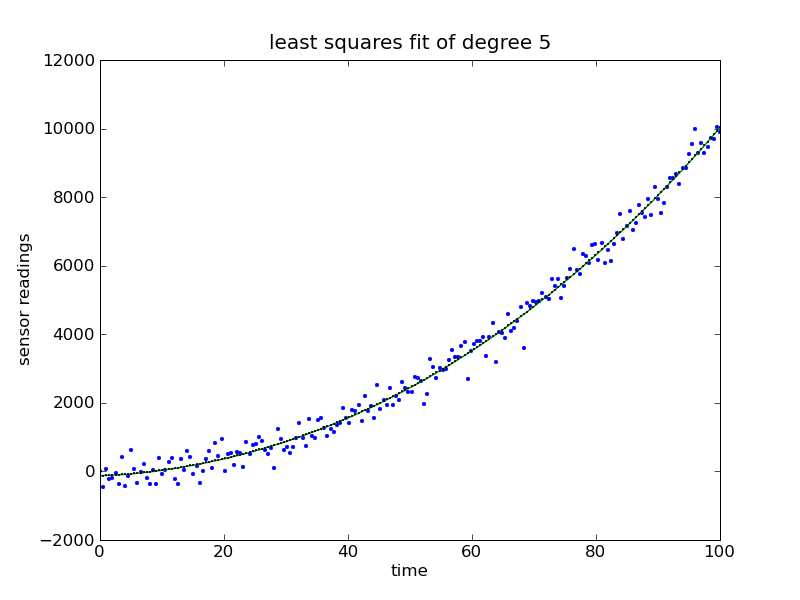
One of his first and most significant works was to discover the law the the least squares fitting. This is a mathematical procedure for finding the best-fitting curve to a given set of points by minimizing the sum of the squares of the offsets of the points from the curve.

This lead to a situation that will earn Gauss the position of Director of Göttingen's Observatory. Ceres, a new small planet discovered by an italian astronomer, had dissapeared behind the Sun, and only 9 degrees of its orbit had been followed. Gauss used this data and his Least Squares method to predict with outstanding accuracy the position of the asteroid.  
Another great discovery at the time was the demonstration that a 17 side regular poligon could be drawed with just a ruler and compass, and the general case that this could only be done with poligons with a number of sides of the form 2^n or 2^(2^n)+1. This problem had been around since the greeks, and many mathematicians throughout history had unsuccessfully tried to solve it.

He proposed the Fundamental Theorem of Algebra, where he demonstrates that every polynomial has a root of the form a+bi, and that a degree n polynomial has n real roots. He also proved the Fumdamental Theorem of Arithmetics, which states that every natural number can be represented as the product of primes in only one way.

Gauss was also devoted to number theory and geodesy, and his publications all had one thing in common, his highly rigorous demonstrations. This caused many of his work to remain unpublished until after his death, even some were discovered many years later.

Defenitely one of the greatest minds of all times, I hope you learned a little bit more about this genius.

jueves, 31 de octubre de 2013

Math on science (I)

Ever wondered how much influence math has in our everyday life?

It is not too much to say that almost EVERYTHING surrounding us is related to math, from the most obvious (engineering, statistics, computers etc) to less intuitive areas such as music and even biology.

As Galileo Galilei said in 1623: "The book of nature is written in the language of mathematics".

I'm sure all of you have heard the name Leonardo Da Vinci, some his contributions to so many areas in science, arts etc. are world famous, but maybe the name Leonardo De Pisa is not so well known. At least by his first name but, what about Fibonacci?

Fibonacci
Leonardo Pisano (1170 -1250) was a merchant and mathematician who lived in Italy and became known for spreading the hindu-arabic numeration system in Europe through his book Liber Abaci (Book of Calculation). In this book, as a solution for the problem of how the population of rabbits grows, it was written for the first time the sequence of numbers now known as Fibonacci Numbers:

1, 1, 2, 3, 5, 8, 13, 21, 34...

Notice any pattern? In Fibonacci's Sequence you get every number by adding the two previous ones.
It may seem that there is nothing else to this sequence than meets the eye, and in fact it would have been like that if biologists and other scientists hadn't found some interesting properties.

The way that the shell of snails grow can relates to the fibonacci sequence in the way you can see in the following picture:

 As you can see, the side of each square is a number of the sequence.
There is also an interesting relation between these numbers and the way plants grow. Plants try to be as efficient as possible when absorbing light from the Sun, son no leaf is over another one. Usually branches in plants form a spiral around the stem. If you take the leaf at the bottom of the stem and count it as 0, and then you count all the leaves from there to the top, for most plants you will get a number of the Fibonacci sequence. Also if you count the laps that took you to get to the top (upwards spiral) it will also be a term of the sequence.
The way seeds are arranged in daisies and pine cones also form spirals that go around a number of times that is a Fibonacci number. If you count the petals in each layer in roses, you will alaso notice something...


Also the phalanxes in your fingers follow this rule. You have to admit there is a lot to this sequence....but there's more...
In a bigger scale, the arms of the spirals that galaxies form, are also arranged according to Fibonnaci's numbers.

But the last property I want to talk about today is one that will deserve a post on its own in the future: The Golden Ratio.

The golden ratio is an irrational number represented by the greek letter phi (φ or Φ = 1.6180339...), and it has been around for thousands of years. For artists and architects, it's a proportion that represents beauty. There  is a lot to say regarding the golden proportion, but as I mentioned before, we'll do that in the future. For now I want to talk to you about the relationship between this number and Fibonacci. As it turns out, if you divide any term of the sequence by its predecessor, the further you go into the sequence, the closer you will get to the golden ratio.


It is certainly curious that this sequence has so many properties, there are obviously more that the ones I mentioned, some of them related to advanced math, but I find it amazing that when Fibonacci thought of it, he had no idea of all it would mean...


sábado, 12 de octubre de 2013

Find your limits


I'm sure by now most of you are more than familiar with the concept of limit of a function, but I believe it is a great place to start our blog with.

At first, the idea of limit of a function in a point was used by mathematicians without worrying of having a precise definition for it. When the time came for mathematical analysis principles to be formalized, it was A.L. Cauchy (1789-1857) who wrote the definitive version, the one we still use today. It goes like this:

A function f(x) has a limit L in a point p if for every real number ε > 0 exists another real number δ > 0 such as |f(x) - L| < ε if 0 < |x - p| < δ and x ≠ p, where δ is chosen depending on ε. It is written


But, what does this exactly mean? What this definition tells us is that when x takes values close to p, as close as you want, but without being equal to p, both from the left and the right of p (higher and lower values than p), the function approaches to a value L, which is the limit of the function, as much as we want.

With this definition it comes natural to assume that for the limit L to exist, it's value must be the same whether we approach from the left or from the right. In fact, this is the only requirement for the limit to exist, as we don't need the function to exist in a certain point for it to have a limit in that point. We will understand this better with an example:

We want to find the limit of $$\displaystyle\lim_{x \to{1}}{\displaystyle\frac{x-1}{x^2-1}}$$

If we try replacing the x by 1 we will get the following: 
$$ \frac{x-1}{x^{2}-1} = \frac{1-1}{1^{2}-1} = \frac{0}{0} $$
This is what we call an indetermitation, which means that the function does not have a representation in that point, ie, it does not exist.

In this case we have that f(1) does not exist, but we can still try to find the limit. If we take a closer look at how the function behaves when approaching 1 from right and left, it's relatively easy to see where things are going.

f(1,5)= 0,4...                                           f(0,5)= 0,66...
f(1,25)= 0,44...                                       f(0,75)= 0,57...
f(1,1)= 0,47...                                         f(0,9)= 0,52...
f(1,01)= 0,49...                                       f(0,99)= 0,502...

Right now it seems intuitive to think that if there was a f(1), it would be equal to 0,5. 
So, how can we solve this limit without having to make so many tedious calculations? Well, there are several tools, techniques and methods you can use to solve limits, but usually the simplest solution is the best one, let's see 
$$ \frac{x-1}{x^{2}-1} = \frac{x-1}{\left(x-1\right) \cdot \left(x+1\right)} = \frac{1}{x+1} = \frac{1}{2} $$
By cancelling out the (x-1) we get the solution to the limit.

This is problably the easiest method and the easiest type of limit, but math, as building houses, always has to start with the foundations. There will me more math to come.....stay tuned!!

jueves, 10 de octubre de 2013

Aula UE

Hello Everyone!!

Please visit out youtube channel Aula UE, where you an find contents on math, physics and all your basic engineering needs


Click on the following link to find out - Aula UE Youtube Channel


Welcome!

This blog has been created by Jaime Manuel Martínez Pérez as an integrated project for the 1st year Aerospace Engineering Degree taught at the Polytechnic School of the “Universidad Europea de Madrid”. Academic Year 2013-2014.

The goal of this blog is that we all learn a little science from each other and, why not, have some fun while we're at it. I'm really looking forward to reading your comments, so please, feel free to do so, whether it is to discuss, propose a new subject...whatever!!